
Profile : Jean-Marc Allègre
Born between Aigues-Mortes, Saint-Laurent-d'Aigouze and Le Grau-du-Roi, Jean-Marc Allègre has lived many lives. A top-level athlete, military instructor, dancer, actor, stuntman, restaurateur and passionate ambassador of the Camargue, his remarkable journey is anything but ordinary. Here is his story, told through an exceptional interview.
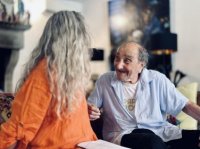
Jean-Marc Allègre, a Camargue man of a thousand lives
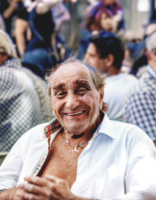
► You were born in 1930. What was your family environment and childhood like ?
I was born in 1930 between Aigues-Mortes, Saint-Laurent-d'Aigouze and Le Grau-du-Roi, which was still only a small village at the time. I grew up with my two grandmothers, one Protestant and the other Catholic, and I often tried to ease the tensions between them. My father, whose own father had died in the First World War, had trained as a mechanic. My grandmother ran a tobacco shop that did very well in the 1920s. At the age of ten, a year ahead of my classmates, I entered Saint-Stanislas College in Nîmes. After a serious fall that shattered my elbow, doctors feared I would be left disabled. I eventually recovered, but failed my school certificate. Then the war broke out, and we moved to Saint-Quentin-la-Poterie. I finished school in Uzès before returning to Nîmes after the Liberation.
► Did you already know what you wanted to do ?
Yes. I wanted to become a physiotherapist and a sports instructor. At fourteen or fifteen, I entered a competitive entrance exam involving gymnastics, running and jumping. I studied anatomy carefully, but on the day of the exam my mind went completely blank, and I failed. My father then told me, "You need to learn a trade." I replied, "Like you, at the military school." I earned a vocational qualification as a fitter-turner, worked in a factory in Nîmes while continuing gymnastics, and then, like everyone else, joined the army.
Military Service and Sporting Career
► How did your military career begin ?
I asked to join the paratroopers but was assigned instead to the Moroccan Tirailleurs, an outstanding regiment. In Marrakech, I saw a notice looking for trainee sports and combat instructors, applied, and was accepted. Just two days after arriving in Rabat, I learned that my father had died. Suddenly, I was on my own. Sport became my refuge. A year later, I graduated top of my class, the same class as General Duval, who was also from Aigues-Mortes. He later arranged for me to be posted to Nîmes, close to my mother.
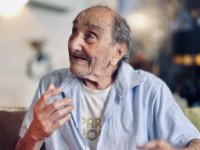
► How did you end up competing at the World Championship ?
In Nîmes, I trained young non-commissioned officers during the day and practised sport in the evenings. I heard about the Military Pentathlon World Championship, which included shooting, the obstacle course, running and other events. The first year I had no team and competed alone. Out of 365 competitors, I finished sixth.
Shortly afterwards, I was selected for the French national team. In 1953, before the end of my military service, we won the French Team Championship, I received the bronze medal, and was sent to the World Championship in Sweden. France won the silver medal. Back in Paris, President Vincent Auriol presented me with the Medal of Honour for Physical Education and Sport.
From Sport to the Stage
► You were also drawn to the performing arts. How did it all begin ?
I've always been a good talker. Before the army, I practised football, judo and boxing. To improve my 400-metre hurdles, I was advised to take... classical ballet ! So I enrolled at the Nîmes Opera, where my dance partner was the ballet mistress. A friend also introduced me to the conservatory, where I discovered poetry and drama. That's where I met Bernadette Lafont. Her parents asked me to walk her home after classes — I was a bit like her bodyguard.
► So you were involved in theatre, dance... and even music?
Yes ! My mother wanted to keep me busy. She first enrolled me in piano lessons, then trumpet. After returning from the army, I opened a grocery shop and every morning I played the trumpet outside to attract customers ! (laughs) I kept dancing with Bernadette Lafont, earned my first pay as a performer and realised I loved being on stage.
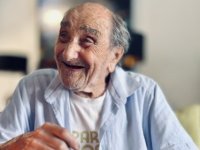
► It's fair to say you were always on the move !
I never stopped. A tailor friend and I moved to Paris. I studied classical dance at Repetto and acting at the Cours Simon, where I met Marcel Bozzuffi, Jean-Louis Trintignant and Roger Dumas. With my southern accent, I dreamed of becoming a tragic actor, but everyone laughed ! In the evenings we went to Saint-Germain-des-Prés. I wanted to meet Boris Vian. One day, the owner of a café asked if I'd ever run a grocery shop. When I said yes, he put me behind the bar. We became friends and later opened Le Distingo, a café frequented by many leading figures of French cinema.
► Was it after an improvised stunt that your film career really began ?
Exactly. After improvising a stunt at the Cours Simon, I was introduced to a professional stuntman and soon offered my first film. Gilles Delamare introduced me to Eddie Constantine, whose stunt double I became for five or six years. I also doubled Robert Hossein and another American actor.
Cinema, Stunts and Memorable Encounters
► That other American actor... it was Paul Newman, wasn't it ?
Yes. Paul Newman became a close friend. I gave him a set of pétanque balls, and he gave me a horseshoe, saying : "Camargue, Texas, French." His wife, Joanne Woodward, and he were very fond of me — I was the only person allowed into their hotel room.
► Did you meet other famous stars ?
Thanks to Eddie Constantine, I met Brigitte Bardot, Roger Vadim, Barbara Laage and Moustache, and I was also Tony Curtis's stunt double. I doubled Robert Hossein in Angélique, Marquise of the Angels. On every film set there was a restaurant... and I was always cast as the cook ! After three years at the Cours Simon and three years at the conservatory, all I got to say was "Careful !" (laughs).
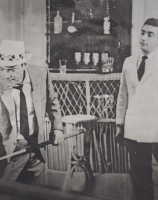
Eddy Constantine and Jean-Marc Allègre
► Tell us about your work as a stuntman.
Sport was my greatest asset : obstacle courses, gymnastics, rings... I even filmed an advert for Midi Libre, holding myself horizontally at the top of the Nîmes Arena ! Back then, stunt doubles were never allowed to reveal who they were replacing : it was in the contracts.
► What was your best-paid stunt ?
Being thrown in a sack from the top of a seven-metre cliff. I earned the equivalent of €3,000.
Artistic Life, Return to the Camargue and Legacy
►Did you have other artistic experiences ?
Yes. I spent three years touring in operettas. I arrived late at an audition without my sheet music, but thanks to my mother I knew the song by heart. I forgot the lyrics halfway through, someone prompted me from behind the curtain... and I got the part ! Later I worked with Andrex and Éliane Dorsay, presented fashion shows in major hotels and became an entertainer in Saint-Germain-des-Prés.
► After such an extraordinary life, why did you return to the Camargue ?
Family has always come first. Even in Paris I accepted a lower salary so I could call my mother twice a day. Today I do the same with my sister. I was able to buy my property here, and I always dreamed of creating a manade.
Above all, I'm a Protestant child of Aigues-Mortes and Saint-Laurent. You always return to your roots.
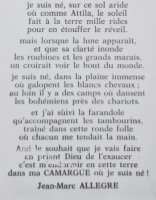
Poem by Jean-Marc Allègre
► Do you have an anecdote to share ?
When I was 18, I ran into the organizer of the 800th anniversary celebrations for Aigues-Mortes. He was looking for someone to accompany the archbishop and carry his crozier. I agreed and marched through the streets behind him ! Much later, I saw the photo in a book… right next to a photo of me passing Jane Birkin : she was getting into a big American car, and I, hidden on all fours, was pedaling away ! (laughs).
► You also contributed to tourism in the Camargue.
In 1970, I opened L’Allegro. I’ve directed seven or eight commercials, two of which won Oscars in the U.S. I made Les Coups with Jacques Lefebvre. I’ve had my ups and downs, but I’m not going to complain.
What message would you like to share ?
If you want to achieve something, don't listen to people who have never tried themselves.
All rights reserved – reproduction, distribution or use prohibited without the prior written permission of the Aigues-Mortes Tourist Office.
Office de tourisme
Aigues-Mortes
Place Saint Louis - BP 23
30220 AIGUES-MORTES