
The protestantism in Aigues-Mortes
Immerse yourself in the turbulent history of Protestantism in Aigues-Mortes, marked by power struggles, persecution and resistance.
From a Huguenot stronghold in the 16th century to a prison for Protestants after the revocation of the Edict of Nantes, the town witnessed significant episodes in French religious history.
The Constance Tower, a symbol of faith and courage, now embodies the memory of the men and women who chose to resist rather than give up.

A Meeting with Dark Consequences
In July 1538, Francis I chose Aigues-Mortes to meet Emperor Charles V. Hoping to obtain the coveted Duchy of Milan, the King of France welcomed his rival with great ceremony in the fortified town founded by Saint Louis. This meeting, marked by grand ceremonies and promises of reconciliation, was intended to usher in a new era of peace.
But the commitments made by Francis I to the emperor had dire consequences : upon his return, faithful to his agreements, the king ordered the lighting of the first bonfires in Lyon, where French Protestants were burned. This turning point marked the beginning of increasing repression that would profoundly shape the religious history of the kingdom.
Aigues-Mortes, a Huguenot stronghold
Despite the persecutions, Protestantism spread throughout southern France.
- 1574 : the town came under Reformed control.
- 1576 : the Edict of Beaulieu made Aigues-Mortes a Protestant safe haven.
- 1598 : the Edict of Nantes, issued by Henry IV, confirmed this situation.
The town then maintained a Huguenot garrison of around 2,000 men until 1622, when Louis XIII and Richelieu retook the town. The Protestant governor, Gaspard III de Coligny, handed over the keys to the town in exchange for a marshal’s baton, marking the end of Protestant autonomy and the beginning of repression in the town.
This period highlights the strength of local Protestantism and the religious tensions of the 16th century.
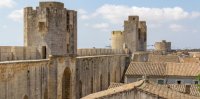
The Wars of Religion and Aigues-Mortes
In the 16th century, France was torn apart by the Wars of Religion.
Aigues-Mortes, a Reformed stronghold for several decades, went through periods of autonomy, sieges and bloody repression, leaving a lasting mark on its inhabitants, divided between loyalty to the king and attachment to the new faith.
The Revocation of the Edict of Nantes
In 1685, Louis XIV revoked the Edict of Nantes : Protestants lost their rights and had to renounce their faith or flee the kingdom.
From 1686, Aigues-Mortes became a place of imprisonment for those who refused to comply. The town’s towers, especially the Constance Tower, held hundreds of prisoners. Men, often physically strong, were sent to the king’s galleys, while women, some of whom remained captive for decades, endured long and harsh imprisonment.
Figures of resistance
► Paul Ragatz : a Swiss soldier imprisoned in 1688, he sang psalms that were taken up by the female prisoners in the lower room, disrupting the administration. The authorities eventually sealed the oculus connecting the two floors.
► Abraham Mazel : a Camisard, he organized a spectacular escape in 1705 with 16 companions, using a rope braided from shirts, becoming an example of courage and ingenuity.
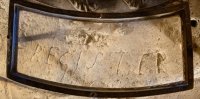
► Marie Durand : arrested at the age of 19, she spent 38 years in the Constance Tower. She became a symbol of Protestant resistance, with the word “RESIST” engraved in stone, a call to persevere despite oppression and injustice.
Conditions of detention
In the towers : overcrowding, lack of light, diseases and epidemics, births and deaths in the cells.
The female prisoners, sometimes imprisoned for life, lived in extreme poverty. The letters of Marie Durand and the prison records bear witness to these dark years.
Liberation and remembrance
In 1767–1768, the Prince of Beauvau, the new governor of the province, ordered the gradual release of the last Protestant prisoners. The Constance Tower then definitively closed its doors as a prison for religious reasons, bringing an end to more than a century of imprisonment marked by suffering, faith and resilience.
Transformed into a symbol, the Constance Tower is now one of the most powerful places of remembrance of French Protestantism. Each stone seems to recall the silenced voices, whispered psalms and quiet strength of those who refused to renounce their faith.
Now a historic monument and visitor site, it embodies a universal legacy : that of tolerance, freedom of conscience and courage in the face of oppression.

From stone to remembrance
The history of Aigues-Mortes, marked by both royal grandeur, the Crusades and religious persecution, reminds us that heritage can be both glorious and painful.
Preserving its ramparts, monuments and stories means protecting not only the stone, but also the memory of human struggles and hopes.
By passing this history on to future generations, Aigues-Mortes remains a living witness, carrying universal lessons about tolerance and freedom.
AND ALSO…
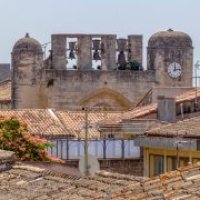
Discover the history of Aigues-Mortes : Crusades, ramparts, Constance Tower...
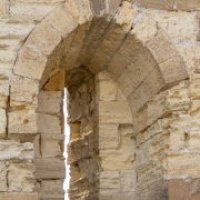
Discover the Towers and Ramparts : Constance Tower, rampart walk, panoramic views...
Office de tourisme
Aigues-Mortes
Place Saint Louis - BP 23
30220 AIGUES-MORTES